Medical Initiative
ROP Screening — Retinopathy of Prematurity
To support vulnerable preterm infants, Mama Tulia provides free ROP screening to different public hospitals in Uganda. Premature babies receive specialized eye screening that help identify ROP at an early stage, enabling timely intervention and improving their chances of healthy vision and development.
RETINOPATHY OF PREMATURITY (ROP) PROGRAM REPORT
Retinopathy of Prematurity (ROP) is a potentially blinding eye condition that affects premature and low-birth-weight infants. It occurs when abnormal blood vessels grow in the retina, the light-sensitive tissue at the back of the eye responsible for vision.
Several factors increase the risk of ROP, including premature birth, low birth weight, prolonged oxygen therapy, infections, and inadequate nutrition. Without early detection and treatment, ROP can progress to severe stages that may result in permanent vision impairment or blindness.
Treatment options for advanced ROP include laser therapy and anti-VEGF injections, which help stop the abnormal growth of retinal blood vessels and preserve vision. Early screening remains the most effective way to identify babies at risk and ensure timely intervention before irreversible damage occurs.
Program Overview
Mama Tulia Ministries collaborates with ophthalmologists, neonatal healthcare workers, caregivers, and public hospitals to support early identification and management of Retinopathy of Prematurity among high-risk infants.
The program focuses on screening preterm and low-birth-weight infants, particularly those who have received oxygen therapy, to ensure early diagnosis and timely treatment. Through regular screening clinics, caregiver education, and referral support, the program is helping to prevent avoidable childhood blindness among Uganda's most vulnerable newborns.
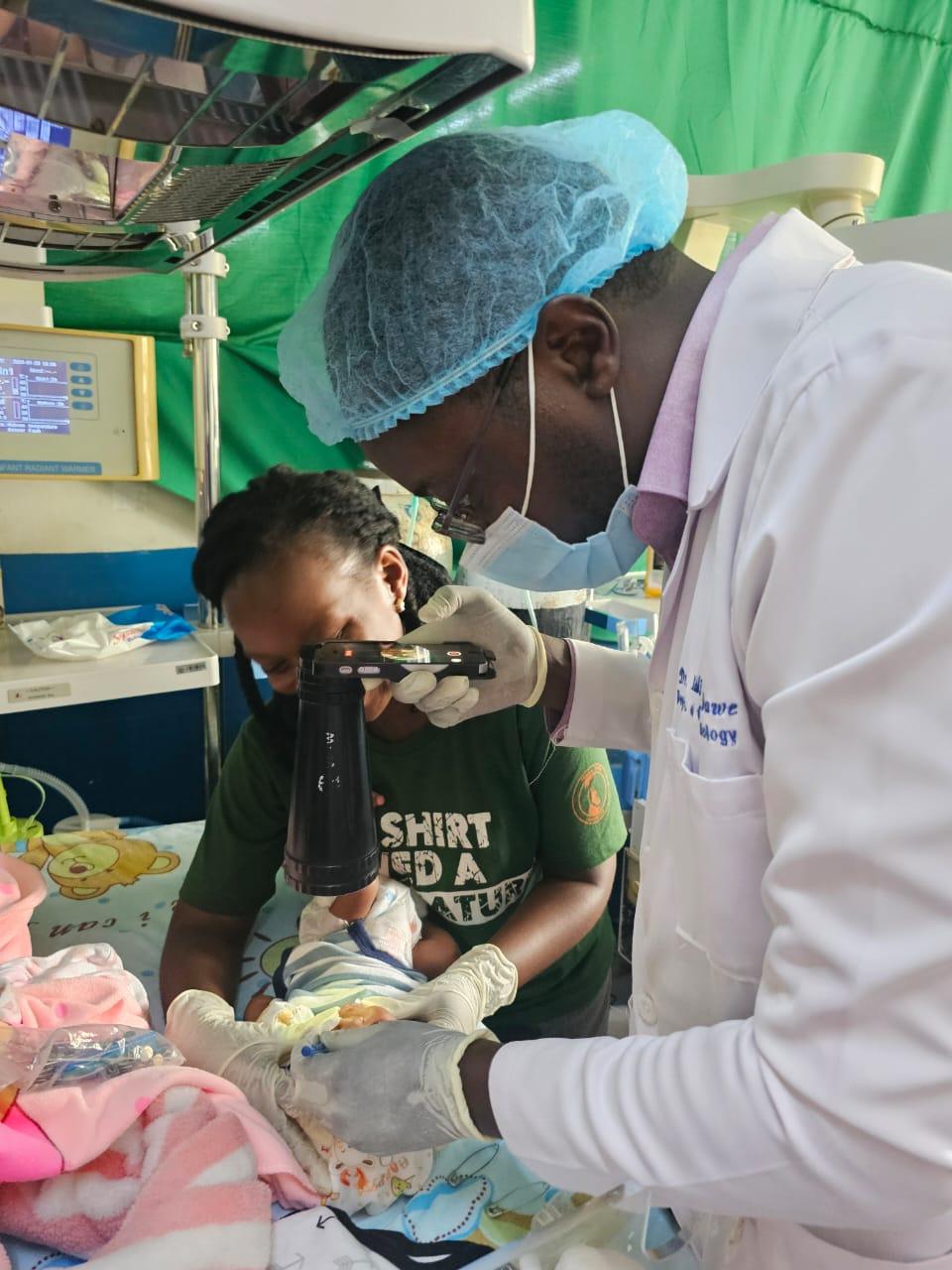
During the screening, the baby’s eyes are dilated with eye drops, and an eye specialist examines the retina using a small instrument. A small device called a speculum may be used to gently hold the eyelids open.
We organize monthly ROP screening outreaches in collaboration with ophthalmologists and public health facilities to identify infants at risk of blindness and link them to timely treatment and follow-up care. This exam can be difficult for families to see and uncomfortable for the baby. Babies need to be held still, and they may cry or become upset during the process. Even when it is brief, it can feel intense.
Impact to Date
· Increased awareness and knowledge of Retinopathy of Prematurity (ROP) screening and treatment among healthcare workers and caregivers.
· Enhanced understanding of the importance of timely ROP screening and treatment for premature infants.
· More than 2016 premature babies have been screened for Retinopathy of Prematurity.
· 214 babies have been diagnosed with ROP.
· 176 babies have received timely treatment
Hundreds of mothers and caregivers have been educated on the importance of ROP screening, follow-up care, and proper nutrition for premature infants.
Caregiver Education
We empower parents and caregivers with information about:
-The importance of ROP screening
- Follow-up schedules and appointment adherence
- Infant nutrition and developmental care
- Early warning signs requiring medical attention
Our work has strengthened referral pathways between neonatal units and ophthalmology services while increasing caregiver awareness and improving access to specialized neonatal eye care for underserved families.
Challenges
Despite the progress achieved, several challenges remain:
· Limited awareness among parents and caregivers about Retinopathy of Prematurity and the importance of early screening.
· Missed follow-up appointments due to transportation costs and other socioeconomic barriers.
· Limited availability of specialized ROP treatment centers across the country.
· High treatment costs for families requiring advanced care.
· Inadequate access to screening services for premature babies living in rural and hard-to-reach areas
Recommendations
· To expand the reach and impact of the program, continued support is needed to Increase awareness about ROP among healthcare workers, parents, and communities.
· Expand screening services to more hospitals and neonatal units across Uganda.
· Support treatment costs for babies diagnosed with ROP.
· Strengthen follow-up systems to ensure timely care and monitoring.
· Extend services to rural and underserved communities where access to specialized eye care remains limited.
Conclusion
Mama Tulia continues to transform the lives of premature babies by preventing avoidable childhood blindness through early screening, diagnosis, and treatment. Through sustained collaboration, awareness, and support, more vulnerable infants can be reached, treated, and given the opportunity to enjoy healthy vision and a brighter future.
Why It Matters
Early detection and treatment of Retinopathy of Prematurity can prevent lifelong visual impairment and blindness. By connecting hospitals, eye care specialists, caregivers, and community support systems, we are helping to build a future where every premature baby has the opportunity to see, learn, and thrive.
Together, We Can Protect Vision and Transform Lives.
Your support helps us reach more premature babies, provide life-saving screenings, facilitate treatment, and prevent childhood blindness.
Support ROP Screening — Retinopathy of Prematurity
Your donation helps us reach more mothers and save more lives through this program.